How to Manage Exterior Lighting Glare: Practical Engineering and Design Strategies
Outdoor lighting plays a essential role in modern infrastructure. It provides safety, security, and architectural highlight across commercial and residential sites. However, poorly configured luminaires often produce high levels of visual discomfort. How to Manage Exterior Lighting Glare. Excessive source brightness impairs visual acuity instead of improving nighttime clarity.
The Complexity of Outdoor Light Distribution
Managing light in open outdoor environments presents distinct physical challenges. Unlike interior spaces bounded by reflective walls and ceiling planes, outdoor sites feature dark backgrounds. These dark surroundings amplify high-contrast light sources. Unshielded lamp filaments or raw LED modules create extreme brightness ratios. When light strays beyond intended boundaries, human vision suffers immediately.
Establishing Systemic Control
Addressing visual discomfort requires a methodical approach to design and installation. Understanding how to manage exterior lighting glare enables planners to optimize visibility without over-illuminating surrounding spaces. High-performance optical control lowers energy usage while protecting adjacent properties from intrusive spill light. Sustainable site design balances illumination needs with human visual physiology.
How to Manage Exterior Lighting Glare
Multi-Perspective Analysis of Architectural Lighting
Exterior glare control must be evaluated from multiple technical viewpoints. Electrical engineers focus on wattage and luminous efficacy. Optical designers evaluate beam angles and luminaire cutoff distributions. Facility managers prioritize safety, durability, and operating costs. Neighboring residents care about light trespass and window spill.
Contrast Ratios and Human Visual Adaptation
Human eyes adapt dynamically to ambient light levels. At night, pupils dilate to gather ambient photons. When an exposed light source enters the field of view, neural pathways experience localized saturation. This high contrast degrades image definition on the human retina. Mastering how to manage exterior lighting glare relies on reducing direct lamp visibility while maintaining target illumination.
The Oversimplification Trap in Outdoor Lighting
A common error involves installing brighter fixtures to solve visibility problems. Higher lumen output often worsens contrast ratios. Excessive light creates deep shadows along perimeter boundaries. Pedestrians struggle to adjust when moving between bright patches and dark zones. Effective optical governance prioritizes uniform light distribution over raw fixture output.
Deep Contextual Background
Historical Evolution of Outdoor Fixture Engineering
Early outdoor illumination relied on low-intensity gas lamps and flame sources. These early fixtures produced low lumen output and minimal visual glare. The invention of high-intensity discharge (HID) lamps revolutionized commercial outdoor lighting. Metal halide and high-pressure sodium lamps delivered high lumen output from compact enclosures. However, HID fixtures frequently created intense glare and broad light pollution.
The Solid-State Lighting Revolution
The transition to light-emitting diode (LED) technology transformed energy efficiency across cities. Modern LEDs offer long operational lifespans and lower power demands. Despite these advantages, early LED retrofits introduced severe glare challenges. High-luminance micro-chips emitted intense light from small surface areas. Retrofitting bare LED modules into legacy fixtures created harsh visual conditions.
Environmental Regulation and Dark-Sky Policies
Growing public awareness of light pollution led to stricter regional lighting codes. Municipal ordinances now enforce full cutoff standards and strict trespass limits. Standards such as LEED and DarkSky certification mandate controlled optical performance. Knowing how to manage exterior lighting glare has evolved into a key regulatory requirement for site development.
Conceptual Frameworks and Mental Models
The BUG Rating Classification System
The Illuminating Engineering Society established the BUG rating system to evaluate luminaire performance. BUG stands for Backlight, Uplight, and Glare. Each metric is scored on a scale from 0 to 5.
-
Backlight (B): Measures light directed behind the fixture toward property lines.
-
Uplight (U): Quantifies upward light escaping into the night sky.
-
Glare (G): Evaluates high-angle forward light that enters human lines of sight.
Lower numerical scores indicate superior optical containment and minimal light spill.
Adaptation Luminance and Contrast Baselines
Visual comfort depends on ambient adaptation levels. In dark rural settings, even a low-wattage unshielded bulb creates significant discomfort. In brightly lit commercial centers, higher ambient light mitigates high-contrast sources. Fixture output must be calibrated to match the prevailing background brightness.
Three-Dimensional Cutoff Envelope Geometry
Physical shielding uses housing geometry to block direct views of the light source. The cutoff angle determines the threshold where lamp brightness becomes hidden from view. Recessing LED boards deep within fixture housings isolates direct beams from peripheral vision.
Key Categories or Variations How to Manage Exterior Lighting Glare
Full Cutoff and Fully Shielded Luminaires
Full cutoff fixtures emit zero light above the horizontal $90^\circ$ plane. Luminous intensity remains near zero at high angles close to the horizontal axis. Directing all light downward eliminates skyglow and prevents direct eye exposure.
Louvers, Baffles, and Physical Visors
Mechanical accessories attach to fixture housings to physically block stray light rays. Louvers create grid patterns that trap wide-angle emissions. External visors extend fixture rims, extending optical cutoffs along sensitive site perimeters.
Micro-Prismatic and Diffuse Lenses
Standard clear glass covers provide high light transmission but expose bare LED chips. Micro-prismatic lenses scatter point-source brightness across textured surfaces. Scattering intense light lowers surface contrast while maintaining directional beam control.
Directional Accent Lighting and Snoots
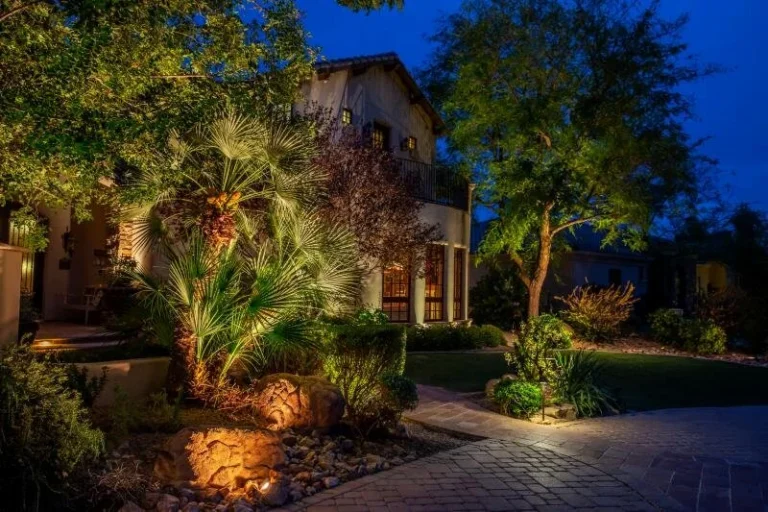
Architectural spotlights require narrow beam angles to highlight building facades. Uncontrolled floodlights spill light across pedestrian walkways. Equipping directional spots with internal cylindrical snoots contains beam spreads strictly onto target surfaces.
Low-Level Pedestrian Bollards
Pathways benefit from low-level bollards and step lights. Placing light sources closer to ground level minimizes direct eye contact. Downward-reflecting louvers inside bollard housings prevent horizontal light spill into walking lines.
Indirect and Reflected Architectural Lighting
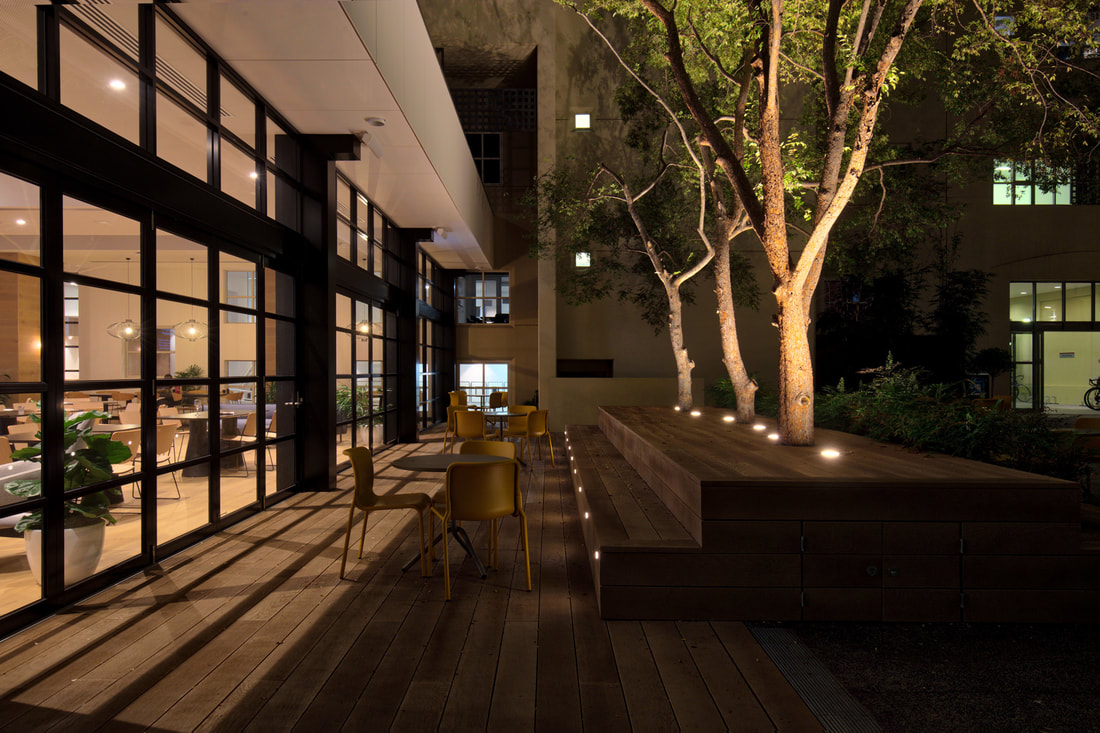
Indirect lighting reflects fixture output off matte structural walls or soffits. Secondary surfaces act as broad, soft reflectors that diffuse light evenly across spaces. Direct lamp visibility is eliminated, providing high visual comfort for hospitality outdoor spaces.
Comparison of Glare Control Hardware
| Hardware Type | Target Glare Vector | Optical Efficacy | Primary Application | Maintenance Need |
| Full Cutoff Housing | High-Angle Horizontal | $80\% – 90\%$ | Parking Areas, Roadways | Low |
| Internal Louver / Baffle | Wide-Angle Peripheral | $60\% – 72\%$ | Architectural Spotlights | Low to Moderate |
| Micro-Prismatic Lens | Direct Point-Source | $75\% – 85\%$ | Walkways, Entrances | Low |
| External Visor / Snoot | Light Trespass | $65\% – 75\%$ | Property Boundaries | Low |
| Indirect Reflective Panel | Direct Source Contrast | $45\% – 60\%$ | Outdoor Lounges, Canopies | Moderate |
Decision Framework for Hardware Selection
Selecting the right optical hardware depends on mounting height, target surface area, and property line proximity. Site planners must decide whether physical shielding or optical diffusion offers the most effective solution for specific site constraints.
Detailed Real-World Scenarios How to Manage Exterior Lighting Glare
Scenario 1: Urban Residential Property Boundaries
A residential complex experienced glare complaints from neighboring properties due to high-output perimeter floodlights. Original fixtures utilized unshielded flat glass covers angled at $45^\circ$. To fix the issue, technicians replaced the units with full cutoff wall packs featuring forward-throw optics. External side visors were added to prevent horizontal light spill. Property line illuminance dropped significantly, resolving compliance issues.
Scenario 2: Commercial Parking Facility Retrofits
A commercial shopping center contained legacy HID pole lights that generated uneven brightness and dark voids. The facility upgraded to modern LED fixtures rated at BUG G1. Mounting heights were increased from 18 feet to 24 feet. Raising fixture height allowed lower total wattages while maintaining uniform ground illumination. Cutoff angles moved above driver eye levels, reducing glare along access lanes.
Scenario 3: Municipal Park and Pathway Systems
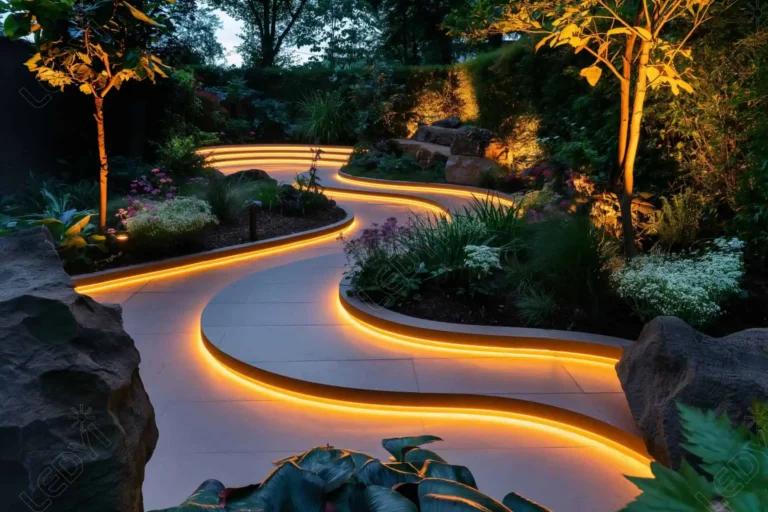
A municipal park pathway required nighttime lighting that would not disrupt natural surroundings. The city installed 3-foot-tall bollards equipped with internal downward louvers and $2700\text{ K}$ warm LEDs. Directing light exclusively onto path surfaces avoided upward and horizontal dispersion. Walkers enjoyed clear pathway definition without sacrificing dark ambient park character.
Scenario 4: Industrial Freight and Loading Terminals
An industrial logistics hub operated 24-hour loading docks where overhead high-bay lights blinded reversing truck drivers. The engineering team lowered fixture mounting positions and added $30^\circ$ internal cutoff shields. Broad floodlights were replaced with asymmetric task lights directed away from truck backing lanes. Drivers reported improved rear-mirror visibility and faster maneuvering times.
Scenario 5: Coastal and High-Humidity Corridors
A coastal resort faced intense glare caused by atmospheric fog and wet boardwalk reflections. Standard diffused fixtures created blinding halos in foggy weather. Engineers selected narrow-spectrum warm fixtures with anti-reflective glass lenses and deep baffle grids. Controlled beam distribution minimized moisture scattering, preserving clear visual guidance along boardwalks.
Planning, Cost, and Resource Dynamics How to Manage Exterior Lighting Glare
Direct Capital Expenses and Hardware Costs
Implementing optical glare control involves upfront capital investments in specialized hardware. Shielded fixtures, internal louvers, and precision lenses cost $15\%$ to $35\%$ more than open-face luminaires. However, controlled optics direct light efficiently, reducing total lumen requirements across sites.
Indirect Savings and Energy Optimization
Unshielded fixtures waste significant light into skyward and non-target directions. Precision optics allow site operators to use lower-wattage fixtures while achieving necessary foot-candle targets. Reduced energy consumption helps recover hardware installation premiums over time.
Estimated Cost Breakdown for Lighting Projects
| Project Scope | Base Fixture Cost | Optical Shielding Hardware | Photometric Engineering | Estimated Payback |
| Small Commercial ($<10$ Fixtures) | $\$1,500 – \$3,500$ | $\$300 – \$800$ | $\$500 – \$1,200$ | 2.5 – 3.5 Years |
| Medium Facility ($10 – 50$ Fixtures) | $\$7,500 – \$22,000$ | $\$1,500 – \$4,500$ | $\$2,000 – \$5,000$ | 2.0 – 3.0 Years |
| Large Industrial ($50+$ Fixtures) | $\$25,000 – \$80,000+$ | $\$5,000 – \$15,000$ | $\$5,000 – \$12,000$ | 1.5 – 2.5 Years |
Long-Term Value and ROI Metrics
Investing in optical control reduces liability risks associated with driver blinding and pedestrian trips. Lower energy footprints and extended fixture lifespans produce sustainable operational returns.
Tools, Strategies, and Support Systems
Photometric Calculation Software
Lighting engineers utilize calculation tools like AGi32 and DIALux to simulate site performance. Importing manufacturer photometric files generates point-by-point foot-candle grids and glare evaluations. Identifying glare hazards during digital modeling stages avoids expensive field alterations. Understanding how to manage exterior lighting glare in software environments streamline project execution.
Field Adjustments and Physical Shielding
Existing facilities can resolve glare issues by installing aftermarket physical shields. Visors, house-side shields, and glare-reduction films limit light spill without requiring full luminaire replacement. Field technicians perform nighttime re-aiming to ensure tilt angles remain within recommended boundaries.
Dynamic Dimming and Controls
Automated control systems adjust output based on occupancy patterns and time schedules. Integrating 0-10V dimming drivers with astronomical clocks lowers light levels during late-night hours. Reducing output by $30\%$ to $50\%$ when sites are inactive cuts ambient light pollution across surrounding areas.
Correlated Color Temperature Control
Color temperature influences glare perception significantly. High CCT sources ($5000\text{ K}$ or higher) contain high amounts of blue spectrum light. Blue wavelengths scatter more easily inside human eyes, causing internal visual veiling. Utilizing warm color temperatures ($2700\text{ K}$ to $3000\text{ K}$) lowers eye scattering and improves visual comfort.
Surface Reflectance Management
Glare often stems from reflective ground surfaces like wet asphalt or glossy concrete. Specifying non-reflective, textured coatings for outdoor surfaces reduces specular reflections. Proper fixture alignment prevents light beams from reflecting directly into pedestrian lines of sight.
Natural Landscape Integration
Strategic plant placement offers natural physical shielding against light spill. Evergreen hedges, trees, and dense foliage block unwanted light emissions from parking zones. Blending plant foliage with lighting layouts softens visual boundaries across developed properties.
Risk Landscape and Failure Modes
Field Installation Misalignment
Improper installation undermines well-engineered lighting plans. Field crews sometimes tilt full cutoff fixtures upward during mounting to cover wider areas. Tilting a fully shielded fixture as little as $10^\circ$ exposes bare LED chips. Unintentional exposure transforms a compliant luminaire into an aggressive glare source.
Material Degradation and Lens Clouding
Exterior luminaires endure sun exposure, temperature swings, and industrial atmospheric pollution. Polycarbonate covers without UV protection yellow and cloud over time. Degraded plastic scatters light unpredictably, converting controlled directional beams into diffuse glare. Specifying UV-stabilized tempered glass prevents long-term optical degradation.
Theoretical Modeling vs Real-World Elevation
Photometric software calculates light levels assuming perfectly flat ground planes. Real sites feature sloped driveways, retaining walls, and multi-level structures. Unplanned elevation changes can expose fixture interiors to pedestrians walking below pole bases.
Governance, Maintenance, and Long-Term Adaptation
Optical Lens Cleaning Protocols
Dirt, dust, and pollen accumulation on glass covers degrade optical performance. Grime acts as a secondary diffuser, causing fixture covers to glow brightly and produce glare. Establishing routine semi-annual lens cleaning restores original beam control.
Mechanical Re-aiming and Structural Audits
Wind vibration and vehicle impacts slowly alter pole verticality and fixture alignment over time. Annual site audits should check mounting hardware tightness, pole plumbness, and visor positions. Correcting mechanical alignment early maintains long-term code compliance.
Layered Site Governance Checklist
| Audit Task | Inspection Method | Compliance Target | Frequency |
| Cutoff Angle Verification | Inclinometer Check | Zero tilt ($0^\circ$ horizontal) | Annual |
| Boundary Light Spill | Vertical Lux Meter | $<0.1\text{ Foot-Candle}$ at line | Bi-Annual |
| Optical Lens Clarity | Visual Inspection | Zero discoloration or dirt film | Semi-Annual |
| CCT Verification | Spectroradiometer | $2700\text{ K} – 3000\text{ K}$ max | On Replacement |
| Shield Hardware Check | Mechanical Torque Audit | Secure mounting brackets | Annual |
Measurement, Tracking, and Evaluation
Quantitative Field Measurements
Verifying optical performance requires precise light measuring instruments. Technicians use calibrated illuminance meters to record horizontal ground foot-candles and vertical eye-level foot-candles. Comparing horizontal target light levels against vertical eye-level light establishes objective glare metrics.
Qualitative User Experience Audits
Quantitative numbers must be paired with human observer evaluations. Conducting nighttime walkthroughs along site perimeters reveals transient glare hazards. Feedback from facility staff, security personnel, and visitors helps identify unmitigated glare vectors.
Field Audit Log Documentation Example
| Location ID | Luminaire Type | Vertical FC | Cutoff Status | Required Action |
| Pole LP-01 | Full Cutoff LED | 0.02 FC @ Border | PASS | No action required |
| Pole LP-02 | Full Cutoff LED | 0.04 FC @ Border | PASS | No action required |
| Wall Pack WP-04 | Forward Throw | 1.45 FC @ Eye Level | FAIL (High Glare) | Install $15^\circ$ Visor |
| Accent Spot A1 | Narrow Spot | 0.88 FC @ Driveway | FAIL (Spill Light) | Re-aim downward $10^\circ$ |
Common Misconceptions and Oversimplifications
Myth 1: Reducing Wattage Eliminates Glare
Lowering fixture wattage reduces total light volume but does not fix poor optics. An exposed 10-watt LED chip viewed directly against dark surroundings causes high visual discomfort. Glare depends on source luminance and optical shielding rather than wattage alone.
Myth 2: Frosted Lenses Solve High-Lumen Glare
Frosted lenses scatter point-source brightness over broader surface areas. However, high-lumen fixtures with frosted covers still emit light in all directions without directional control. Diffusion alone cannot replace physical shielding and directional optics when considering how to manage exterior lighting glare.
Myth 3: Shielded Fixtures Reduce Useful Light
Some property owners believe fully shielded fixtures produce dim, unsafe spaces. On the contrary, full cutoff luminaires direct light exclusively onto target ground surfaces. Removing high-angle glare improves human visual adaptation, enhancing real visibility.
Myth 4: Warm Light Temperatures Prevent All Glare
Warm color temperatures ($2700\text{ K} – 3000\text{ K}$) lower internal eye scattering. However, CCT represents only one component of visual comfort. An unshielded warm lamp pointed directly at eye level still produces severe discomfort glare.
Myth 5: Software Layouts Guarantee Zero Glare
Photometric software models theoretical horizontal ground planes. Simulations rarely account for windshield reflections, driver eye positions, or site grade variations. Software layouts must be validated with real-world nighttime field audits.
Ethical, Practical, or Contextual Considerations
Impact on Nocturnal Wildlife and Wildlife Corridors
Excessive outdoor lighting and light spill disrupt nocturnal ecosystems. Migratory birds lose orientation when encountering high-angle light spill from tall commercial structures. Nocturnal mammals and insects suffer disrupted foraging and breeding behaviors. Using cutoff shielding and warm light spectrums protects wildlife habitats.
Light Trespass and Neighborhood Relations
Uncontrolled outdoor lighting crossing property lines creates light trespass issues. Unwanted light shining into residential windows disrupts sleep patterns and causes community friction. Proactively controlling glare demonstrates good corporate citizenship and prevents code enforcement disputes.
Conclusion
Synthesis of Optical Control Principles
Managing exterior glare requires balancing safety, aesthetics, and environmental responsibility. Rather than flooding sites with uncontrolled lumens, modern lighting strategies focus on precision placement, effective shielding, and appropriate light intensity. Eliminating harsh contrast boundaries and shielding raw light sources creates safer, visually comfortable outdoor environments.
Adaptive Management for Nighttime Illumination
Achieving lasting visual quality requires ongoing maintenance and regular field evaluation. Dynamic controls, clean optics, and correct fixture alignment preserve original design intentions. Planners who understand how to manage exterior lighting glare create functional, energy-efficient nightscapes that serve facility users while respecting surrounding communities.